House Wiring Cost Per Point & Rewiring Prices in Malaysia 2026
House wiring is priced per point, not as a lump sum. The market rate is RM95 to RM150 per point. Here is what it should include and how many points a house needs.
Published August 19, 20262 min read
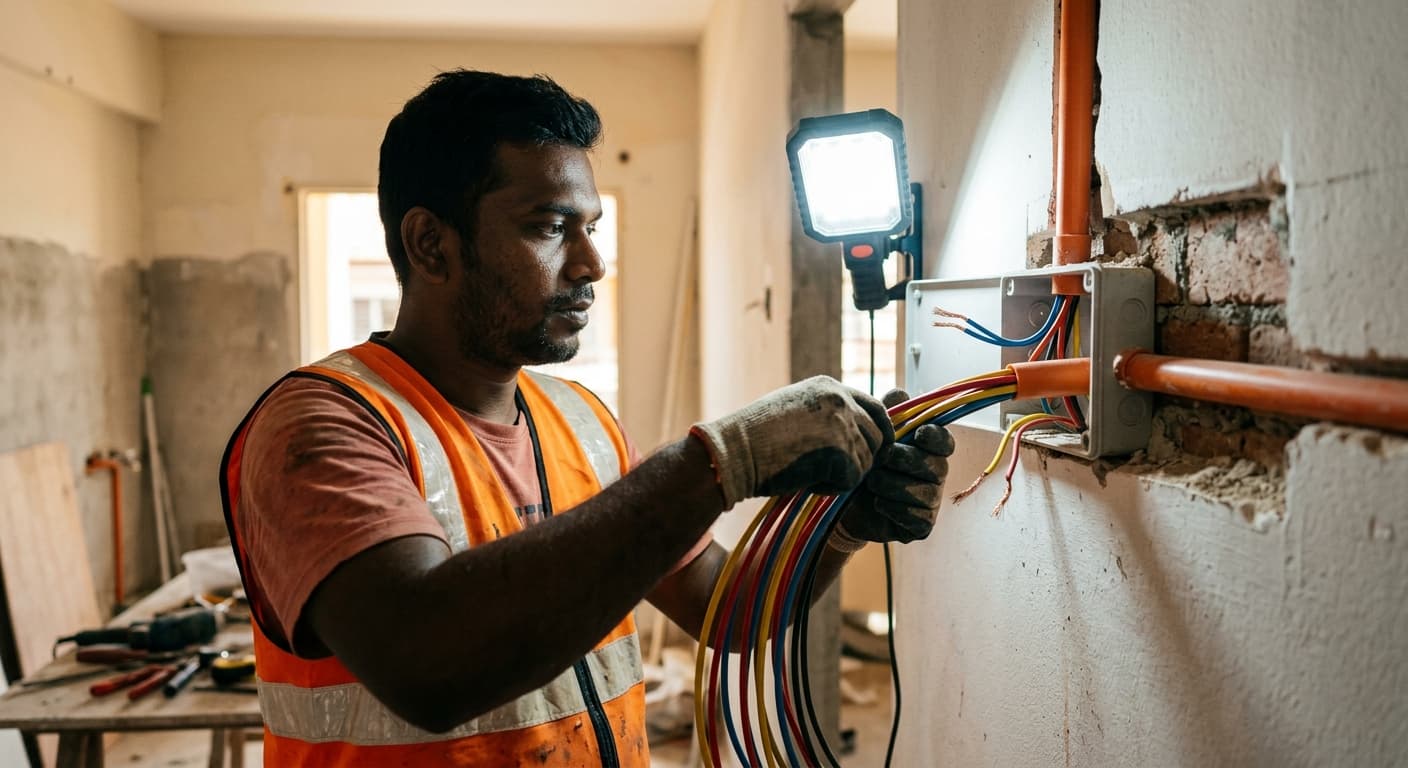
In this article
Electrical work is the item most often quoted as a single lump sum, which is exactly why it is so easy to mark up. Wiring is actually priced per point. Once you know the point count and the rate per point, an electrical quotation becomes simple to check.
What counts as one point
A point means one electrical termination — one socket, one switch, one lighting point, or one air-conditioner point. The rate per point covers cable from the distribution board to that point, conduit, back box and installation.
This matters because two houses of the same size can have very different point counts depending on how many sockets you want.
| Point type | Market rate | Notes |
|---|---|---|
| 13A socket | RM95 – RM130 | Cable and back box included |
| Lighting point + switch | RM95 – RM140 | Light fitting not included |
| Air-conditioner point | RM180 – RM280 | Heavier cable, isolator |
| Water heater point | RM200 – RM300 | Includes a dedicated RCD |
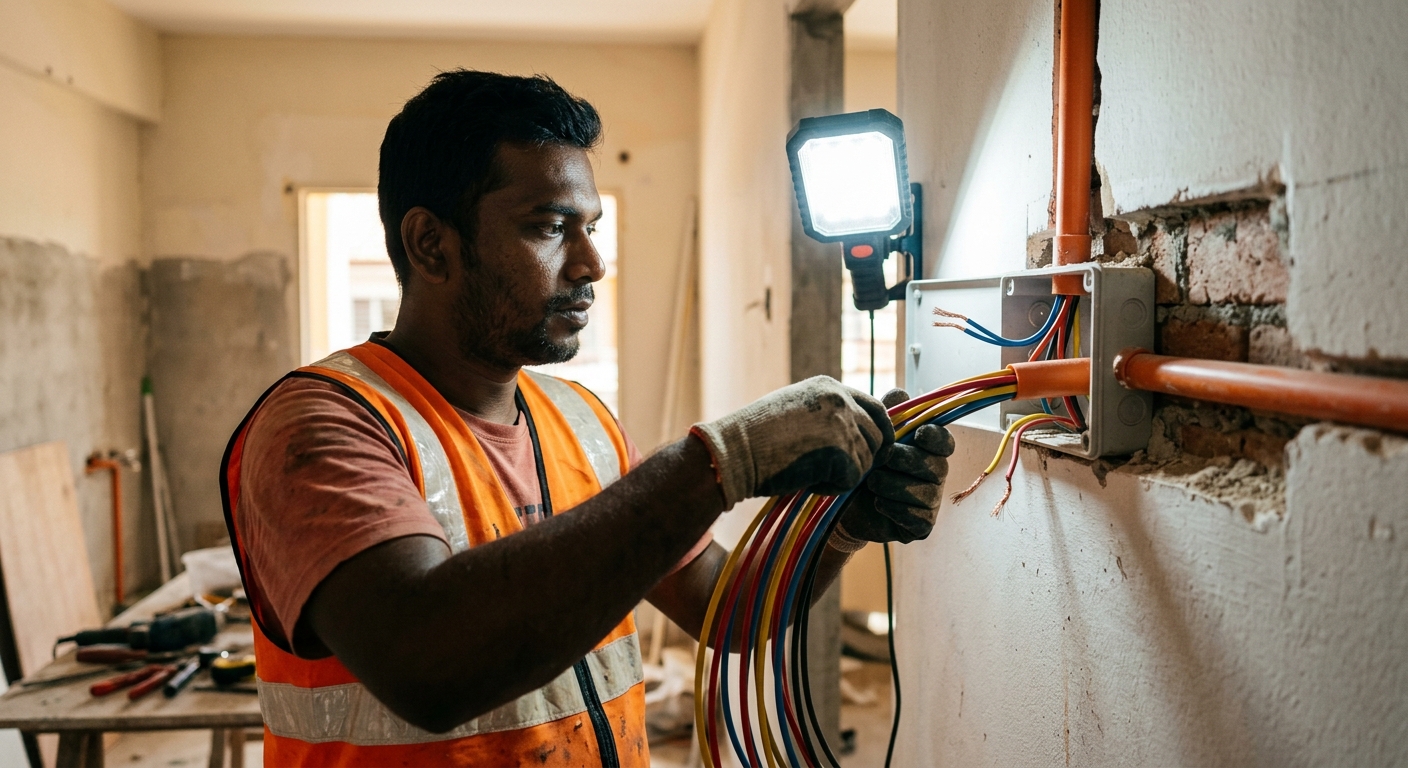
How many points a typical house needs
A typical double-storey terrace needs roughly 60 to 90 points for a full rewire. A three-bedroom flat is usually 35 to 50 points.
- Living room — 8 to 12 points including TV and air-conditioning
- Kitchen — 10 to 14 points, the densest area because of appliances
- Each bedroom — 6 to 9 points
- Bathroom — 2 to 4 points including the water heater
- Exterior and staircase — 4 to 8 points
At RM95 per point, rewiring 75 points is about RM7,125. A RM20,000 quotation for the same scope implies almost RM270 per point.
What belongs on an electrical quotation
A complete electrical quotation should list the point count, the cable type, and whether the distribution board is being replaced. Work without a registered electrician's certification should not be accepted at all.
- Point count broken down by room
- Cable size and brand — PVC insulated, sized to the load
- New distribution board with MCBs and RCD if rewiring fully
- Insulation testing and a completion certificate
- Making good the walls after chasing

When a full rewire is genuinely needed
A full rewire makes sense for houses over 25 years old, homes still running rubber-sheathed cable, or a distribution board still using rewirable fuses.
For a house 10 to 20 years old, adding new points and upgrading the distribution board is usually enough and saves more than half the cost of a full rewire. A contractor who jumps straight to a full rewire without inspecting the existing cable should be asked why.
What to do next
Ask for the point list room by room. That number alone turns the conversation from haggling into arithmetic.